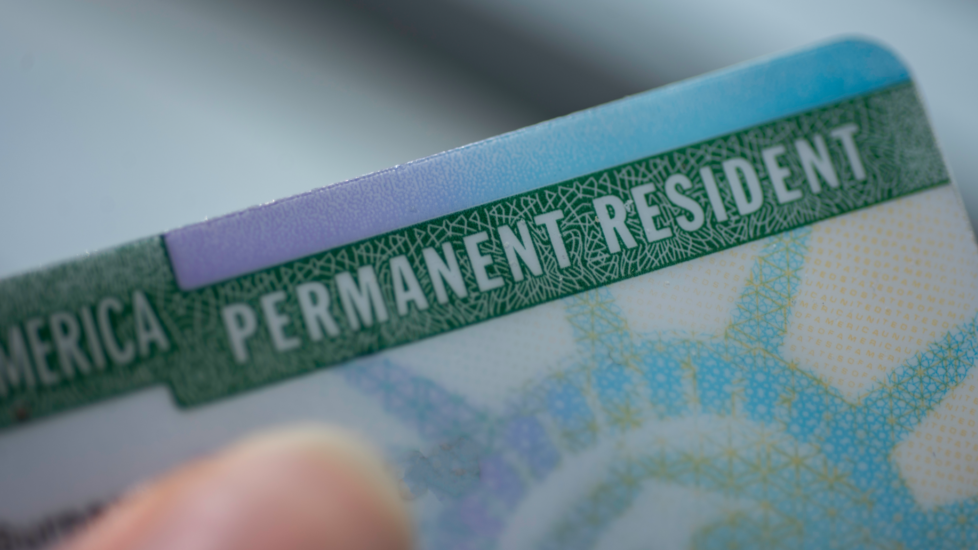
Assistance with Obtaining your Green Card
Getting a green card is one of the most important legal steps you'll ever take. The paperwork is complex, the deadlines are unforgiving, and a single mistake can cost you years.
For more than 20 years, the Law Offices of Michael Ponder have helped families across the Austin area secure lawful permanent residence in the United States. Whether you're filing your first I-130 petition or preparing for an Adjustment of Status interview, you'll work directly with an experienced immigration attorney — fluent in English and Spanish — who knows exactly what USCIS expects.
What Is a Green Card?
A green card — formally called a Permanent Resident Card — gives you the legal right to live and work permanently in the United States. Once you have one, you can stay indefinitely as long as you maintain your status, travel freely in and out of the country with proper documentation and subject to certain restrictions, and eventually apply for U.S. citizenship through naturalization.
Most people get a green card through one of two paths: family-based sponsorship or employment-based sponsorship. The most common path for our clients is family-based — through a spouse, parent, child, or sibling who is already a U.S. citizen or lawful permanent resident.
The family-based green card process almost always involves two key forms: the I-130 Petition for Alien Relative and the I-485 Application to Adjust Status. Understanding the difference between them is critical, because they do very different things.
I-130 Petition vs. I-485 Adjustment of Status: What's the Difference?
This is the question we get most often. People assume they're filing "for a green card" and don't realize there are actually two separate steps. Here's the plain-language explanation:
The I-130 Petition for Alien Relative
The I-130 is the first step. It is filed by the U.S. citizen or lawful permanent resident who wants to sponsor a foreign family member. The purpose of the I-130 is to ask the U.S. government to officially recognize the family relationship — that you really are someone's spouse, child, parent, or sibling.
The I-130 by itself does not give the foreign relative legal status, a work permit, or permission to stay in the United States. It only establishes the relationship and reserves a place in line for an immigrant visa.
The I-130 is filed by:
The U.S. citizen or green card holder (the "petitioner")
On behalf of the foreign relative (the "beneficiary")
The I-485 Application to Adjust Status
The I-485 is the second step — and only available to certain people. It is filed by the foreign relative themselves, asking USCIS to "adjust" their immigration status from temporary or undocumented to lawful permanent resident — without leaving the United States.
When the I-485 is approved, the green card is issued.
The key requirements for filing an I-485 inside the United States are:
A valid I-130 petition has been filed (often filed at the same time, called "concurrent filing")
A visa is currently available in your category
You are physically present in the United States
You are eligible to adjust status under the law (this is where things get complicated — many people are not eligible and must instead go through Consular Processing abroad)
When the Two Are Filed Together
For immediate relatives of U.S. citizens — spouses, unmarried children under 21, and parents — the I-130 and I-485 can usually be filed at the same time. This is called concurrent filing, and it's one of the fastest ways to get a green card.
For other family categories — siblings of U.S. citizens, married children of U.S. citizens, spouses and children of green card holders — there's a waiting period between when the I-130 is approved and when the I-485 can be filed. The wait depends on country of origin and visa category and can range from a few months to more than a decade.
What If You're Outside the United States?
If the foreign relative is outside the U.S., they don't file an I-485. Instead, after the I-130 is approved, they go through Consular Processing at a U.S. consulate in their home country. The end result is the same — a green card — but the path is different.
We handle both paths. The right strategy depends on your specific situation, and choosing wrong can cost years. This is exactly the kind of decision a consultation with our office can clarify.
Common Family-Based Green Card Categories We Handle
Marriage-based green cards — for spouses of U.S. citizens or lawful permanent residents
Parent-based green cards — for parents of adult U.S. citizens
Child-based green cards — for unmarried children under 21 of U.S. citizens
Sibling-based green cards — for siblings of U.S. citizens (long wait times apply)
Fiancé(e) visas (K-1) — for foreign nationals coming to marry a U.S. citizen
Removal of conditions (I-751) — for people who received a 2-year conditional green card through marriage and need to file for the 10-year card
Green card renewals (I-90) — for existing green card holders whose card is expiring or has been lost
What Can Go Wrong (And Why It Matters)
USCIS denials over preventable mistakes are common — and devastating. Filing fees aren't refunded. Years of waiting can be lost. In some cases, a denial can put a family member at risk of deportation.
The most common preventable errors we see in green card applications include:
Filing the wrong form for the situation (I-485 when Consular Processing is required, or vice versa)
Missing or incorrectly filed Affidavit of Support (Form I-864)
Insufficient evidence of a genuine marital relationship in marriage-based cases
Failing to disclose criminal history correctly — even minor issues
Missing biometrics or interview appointments without proper rescheduling
Filing for adjustment of status when the applicant is actually inadmissible
This is why working with an experienced immigration attorney — or at minimum, having one review your work — matters. If you've already prepared your forms but want a professional check before filing, our Document Review Service provides a flat-fee $900 review by an experienced attorney.
Why Choose the Law Offices of Michael Ponder for Your Green Card
You don't need a huge firm to get a great result. You need an experienced attorney who will personally handle your case, return your calls, and guide you through every step.
When you hire our office for your green card application, you receive:
Personal attention from a senior immigration attorney — not a paralegal or first-year associate
Bilingual service — Attorney Michael Ponder is fluent in Spanish. Every member of our team communicates in both English and Spanish.
20+ years of experience in family-based immigration
180+ five-star Google reviews from clients we've helped
A clear, honest assessment of your case — including the risks and the realistic likelihood of success
Payment plans available — first payment for most cases is $700–$1,000, with monthly payments after that
How the Process Works When You Hire Us
Schedule a paid consultation ($75 paid in advance or $100 at the appointment) — we discuss your situation, review your eligibility, and lay out your options
You decide whether to retain us — no pressure, no obligation
We prepare your I-130 and I-485 (or other relevant forms) — you provide the documents, we handle the legal preparation
We file with USCIS and track your case through every stage
We prepare you for your biometrics and interview — includes a preparation session before the interview. Attorney attendance is available for an additional charge.
You receive your green card
We stay with you from the first consultation to the day your card arrives in the mail.
Frequently Asked Questions
How long does the green card process take?
It depends. Marriage-based green cards for spouses of U.S. citizens typically take 12–18 months from start to finish. They can take less time, however wait times vary widely depending on USCIS priorities at the time you file your application and many other factors. Other family categories can take several years due to visa availability backlogs. During your consultation, we'll give you an estimated timeframe based on similar cases and current USCIS processing trends.
How much does it cost to hire your office for a green card case?
Our fees vary based on the type of case and its complexity. We offer payment plans — the first payment for most cases is between $700 and $1,000, with monthly payments after that. Government filing fees are separate and paid directly to USCIS.
Can I get a green card if I entered the country illegally?
Sometimes. The answer depends on multiple factors — when you entered, who is sponsoring you, whether you've left the country since, and whether any waivers apply to your situation. This is exactly the kind of question we answer in a consultation. Don't assume you don't qualify until you've talked to an attorney.
Do I need to file the I-130 and I-485 together?
Not always. For immediate relatives of U.S. citizens, concurrent filing is usually the fastest path. For other family categories, you must wait for visa availability before filing the I-485. We'll determine the right strategy for your specific situation.
Do you handle green card applications for couples in same-sex marriages?
Yes. Same-sex marriages are recognized for all federal immigration purposes, and we handle these cases with the same care and attention we bring to every family-based green card.
Do you handle green card cases in Spanish?
Yes. Attorney Michael Ponder is fluent in Spanish. All members of our team speak Spanish. Vea esta página en español.
Ready to Start Your Green Card Application?
Don't navigate this alone. Schedule a consultation with our office and get clear, honest guidance about your options — in English or Spanish.
Your green card isn't the end of the journey.
After five years as a lawful permanent resident — or three years if you got your green card through marriage to a U.S. citizen — you can apply for U.S. citizenship. That gets you the right to vote, a U.S. passport, protection from deportation, and the ability to sponsor parents and siblings.
Learn more about U.S. citizenship and naturalization here.
Already filled out your forms? Learn about our $900 Document Review Service.